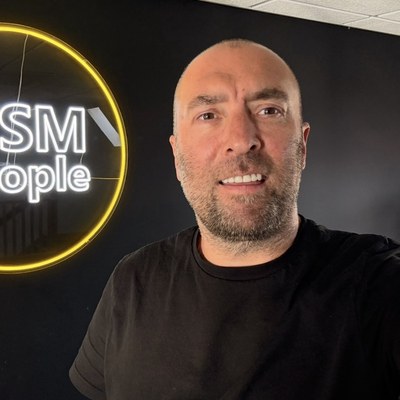
I failed my GCSEs.
Not because I wasn't bright enough. Because a skateboard mattered more to me than school did, and at that age I couldn't see past it. So while most people my age had a fairly clear route mapped out, I didn't. I ended up doing several completely different jobs before I found my way into IT, and even then it wasn't planned. It just happened.
What got me through wasn't a qualification. It was passion, enthusiasm and energy, and the willingness to actually show up and care. But honestly, that alone wouldn't have been enough. What made the real difference was a handful of older, more experienced people on my early teams who took the time to mentor me informally. Nobody assigned them to do it. They just did, and it fast tracked me through management roles years faster than I'd have managed on my own.
There's No Education Route Into ITSM
Here's the thing about ITSM specifically: there isn't really an education route into it. You can't sit a degree in it the way you can law or medicine. Most of the people I know who ended up running service management functions, including David Barrow, our Director of Consulting, got there the same way I did. Not through a defined path, but by accident, because we turned out to be good with people and good in a crisis, and someone gave us a chance to prove it.
Why Luck Isn't a Strategy
Here's what I mean about luck. The people who mentored me weren't assigned to. There was no programme, no obligation, nothing in it for them beyond wanting to help. If I'd landed on a different team, or joined a year earlier or later, I might never have had it. That's not a system, that's chance. And it means the people who most need that kind of guidance, the ones without an existing network, without a family connection to the industry, without the confidence to just ask, are exactly the ones least likely to stumble into it the way I did.
What Frameworks and Certifications Don't Teach You
Certifications and frameworks are useful, and I'd never talk anyone out of getting them. But they teach you the theory of service management, not how to actually run one when a major incident is escalating and three different stakeholders want three different things from you at once. They don't teach you how to build credibility with a team that's been burned by change before. They don't tell you which battles are worth fighting in your first six months and which ones will just get you labelled as difficult. That knowledge lives in people, not in textbooks, and the only way to get it is for someone who already has it to hand it over.
What We Built Instead
That's what we've tried to build with the programme. Not a course, not a webinar series, an actual one-to-one relationship with someone who's done the job, matched to what you're actually trying to work out, not a generic curriculum. An introductory session to figure out where you want to go, three to five sessions built around getting you there, and then ongoing access to a wider community once you're through it, so the relationships don't just stop when the formal sessions do. Whether that's sitting your ITIL certifications with someone who can tell you which parts actually matter in practice, working out how to make the jump from IT generally into ITSM specifically, or just wanting a realistic view of what running a service management function is actually like day to day.
That's the whole reason this programme exists. The mentoring I got was informal, lucky, and entirely dependent on being in the right place with the right people around me. Not everyone gets that. So we built something structured, free, and open to anyone trying to find their way into or up through ITSM, so it doesn't have to come down to luck.
Tim Mills
Founder & CEO, The ITSM People
Free ITSM mentoring, no strings attached
Whether you're starting out, changing careers into ITSM, or a few years in and want to move faster, applications are reviewed individually and it costs nothing.
Apply for the Programme →